All I wanted to do, then, was flex any muscle I had as a writer. And then build some more, hopefully.
I was working as an all-around ninja for a photography magazine, switching spellings from the British to their American counterparts and filing in stories for local coverage. We planned monthly issues, delegated tasks and called up contributors, visual and literary. Fresh from graduation, I was blessed to be working in an environment where I got to write and help put together a magazine.
The days accumulate, however, and soon I knew I was doing less writing and more scrapping together. More managing and overseeing –which was a step in a bigger direction, but not one that I wanted. So I raised my head, and spent some time on the lookout. That’s how I found advertising.
*
One of the ways I described my new job to friends was this: as a copywriter, I was constantly writing. When I wasn’t, I was thinking. What did we think about? Well, ways to get through to our audience. To have them sold on what we’re saying. All advertising is creative sales, but you don’t make your sale on a buck, you make it first with an idea. As a copywriter, my responsibility, next to supplying text to a visual or prompting the visual from a text, was to brainstorm for ideas to solve a client’s problem. To think.
It is said, by a boss or copywriting manual I can’t remember, that you should never go with the first idea that comes to mind. I used to question that adage, thinking, what if that top-of-mind idea actually works?
Thirty-one months into this occupation, I have learned humility and trusting in the guidance of veterans. Truly, ideas on the surface of our consciousness are usually muck – fodder worth flushing out, if not combing through. It is said, again by a living person or a book I can’t remember, that to get to gold, we first need to sort through mess. I used to think that the treasure lay somewhere under, but it is equally worth considering that it lay in the process.
*
A friend once asked what my process is in writing a story. Where do I draw inspiration? How do I put it all together?
I think that as an artist, you live inspired. Inspiration is as much a state you live by, as it is a well you draw from. Over time, you develop a keen set of senses to perceive the world in all its beautiful nuances, and soon, drawing from external stimuli comes more easily. Artists tread and trudge daily through and with inspiration.
But rarely are these observations and ideas written down the moment they are picked up. Instead, they rest on a shelf of our subconscious, until such a time comes for it to be used. As illustration, for example, or anecdote, perhaps. How do we know when it’s time? I’m not sure there are indicators for this, but the gut has proven trustworthy most of the time.
Grace Paley expressed it well when she said something along the lines of thinking with a thread. It is when more than two threads of thought intersect, she says, that she knows she has a story.
This is what I mean by sorting through muck, and cultivating patience for the ideas to find you, when it all feels as though you’ve run out of things to say. They’re there, see. Trust that you’ve gathered them, and that they’ll show up as you continue working them out. They’ll also probably reveal the best way to string them all together.
I believe the process has always been there in writing, but working as a copywriter has taught me the validity of serving it out, start to finish. One must wrestle their way to the mantle of what they want to say – the core of an idea. Only then could they begin to say it well.
*
In advertising, the Big Idea – or the key message – is the foundation on which a campaign rests. Everything flows from this – print ads, TV commercials, Facebook posts, Tweets. Meanwhile, the brand defines the language used, often issuing style guides for the tone and manner expected of all text.
You internalise all this as a copywriter. When, for nine to twelve hours a day, your fingers waltz across the keyboard to churn out copy for a product – or several of them, even – breathing like the brand becomes second nature. As it must, in order for you to write convincingly in its guise.
What’s it like to breathe in your own language? They call this a writing voice, sometimes.
Writing with a diversity of brands is actually more helpful than detrimental in honing one’s voice. The work you’ve put in throughout the day – the linguistic gymnastics, the grammatical digging and expanding, the sentence constructing – later help you articulate what you want to say.
When you transition constantly between writing for different mediums on behalf of different brands, you develop an instinct for how the language works. So that, once outside of work hours, when you are no longer trying to sell, when you want only to tell a story, you are ready. All warmed up. The language now bends to your use, blanketing the mold of your story. All you need is to have internalised what you want to say.
Articulating with fluidity comes as a result of long hours of practice, yet a large part of the learning process is subconscious and instinctive. Copywriting only happens to be one avenue to train. Poetry imparts rhythm and cadence; song teaches sound and structure.
The beauty is that one’s writing voice is both found and built. But as soon as you have that, breathing in your own language becomes second nature.
As it must, in order for you to write convincingly, in no other guise but yours.
*
At this point I’d like to draw a thick, marker line between copywriting and writing for art, and over it scrawl the notes money and life. I work as a copywriter to make ends meet; I write for art to make a life.
The truth is, they share more similarities than differences. The best advertising copy is capable of moving an audience in the same way that a novel or poem does. Copywriting is an art in itself, one that certainly requires three times more than three years to master. While these are some of the insights I have pocketed along the way, there are plenty more I am still learning, and have yet to learn.
There is a freedom in writing for art, however, that does not come with copywriting. It’s pretty obvious: a brand owns your copy, while only your name marks your art. In advertising, you answer to your creative head, to some people in suits, and then to a client. With art, apart from an editor who looks out for your – and their publication’s – best interests, you answer only to yourself.
For the writer, this means constantly bouncing off several questions against the white blank page: why am I writing this again? Does it matter enough to be told? Who would possibly care enough to read it.
If copywriting has taught me anything about writing, it is the will to write itself.
Writing, after all, is more than just communicating, reporting, selling. Writing is documenting. It is rendering, and then relaying; consuming, and then distributing. One writes because one has been moved, by an observation or experience so riveting it must be shared.
If you’ve had any of that, if the slant of light in an empty room brings you memories of the day he left, if the crooked tear of an autumn leaf reminds you of the smile of a lost child – if life has made impressions on you so deeply, that they have carved spaces for themselves in your consciousness of the world, then darling, you have every reason in the world to write.
Not all that is written has been written to sell, and not all that is written ought to be sold. Take it from somebody who writes to sell to pay the bills – then goes back home to write and tell about a life.
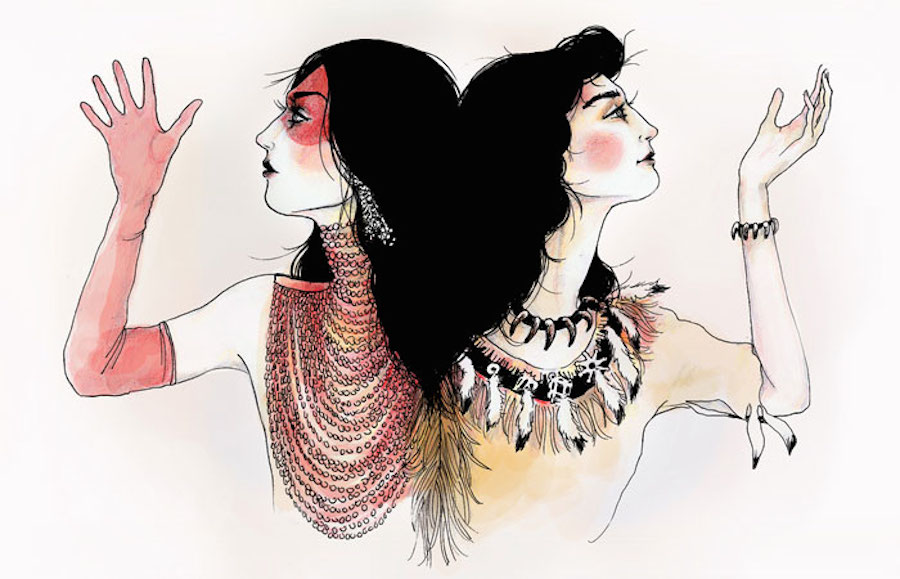
Illustration: Stephanie Ayoub