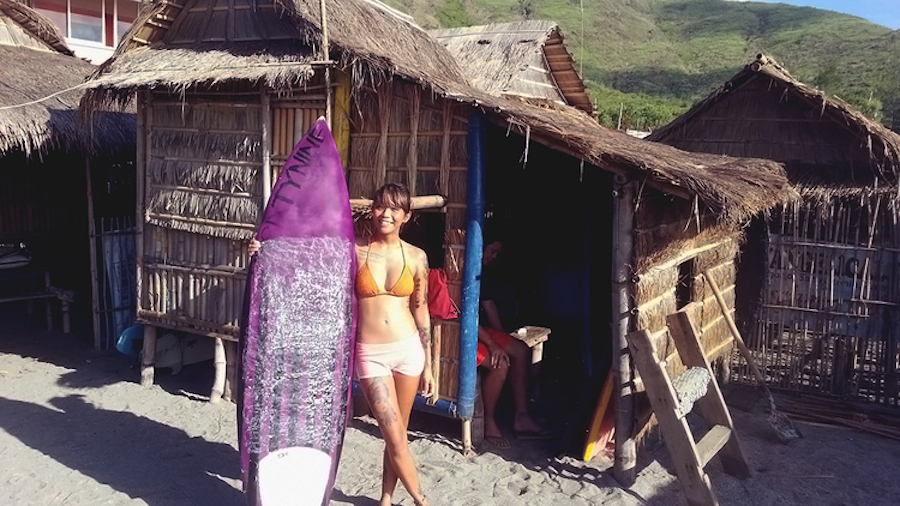
This month’s featured writer is my awesome friend, Camille Pilar.
I first met Pilar three years ago, at an orientation in the school where we both currently teach. Imagine us: two Ateneo not-so-fresh grads, both 23 at the time, who looked like complete opposites. She personified the word ‘cool’ with her interesting fashion sense and her lovely blonde highlights. While I, well… you get the picture. What we lacked in physical compatibility, we made up in our shared love for words. Here’s the thing about Pilar: you can spot her from a mile away — she, literally, has poetry etched on her skin. Her tattoos, the second skin that make up her personality, are so interesting that they’ve even been featured in a variety of online hubs, Buzzfeed being one of them. Pilar’s skin art is a visual clue to the stories bursting inside of her, wild and beautiful ones that produce nothing short of awe.
Pilar has been writing using different online mediums since the golden era of Livejournal. In 2012, she wrote the screenplay of a short film titled ‘A Second’ that went on to become an official selection in the International Film Festival Manhattan NYC as well as the 15th International Eskisehir Film Festival, and a finalist in the 2012 Crystal Palace International Film Festival.
The story of Pilar’s life currently revolves around her love affair with the sea. You can read about her wonderful surfing adventures here.
Pilar is someone whose words are both honest and intelligent. I’m honored that you’ll get to know a little more about her today. 🙂
– Isa
On Storytelling
How much of storytelling comes from within, and how much has to be learned?
First of all, thank you for making me part of this literary adventure! While I may not be a writer in the formal sense, I hope that I could still make your readers smile and want to write some more.
I think that everything about storytelling comes from within. We can develop style by learning how to write, speak or draw better, but one must always pull substance from within. All stories, even the ones that are not about you, start from the desire to share an experience or a feeling, and this desire can only grow from within.
What makes someone a good storyteller? What makes a good story?
A lot of good storytellers are masters of description. They excite one’s senses by filling in all the details: color, sound, scent, time of day, pace. But the best storytellers are those than don’t just transpose you to a different place; they are able to transform you into a different person, even for the briefest moment.
A good storyteller will make you see, but the best ones will make you feel.
This is because a good story is one that has traveled inside the self through reflection. This way, the storyteller does not just paint a picture or narrate information, he or she is able to open a new window in your heart from which you can peer at the world anew.
What is the best way to learn how to tell a good story?
One way to learn how to tell a good story is to live a good story. Go out and collect scenes. Touch things. Add as much sensation and feeling to your bank of memories. I used to think that in order to write well, all I needed was to read a lot of books. Now I know that reading is not enough. There are stories to be found outside of books, events and imagery that have not yet found their form in words, and these are the stories just dying to be told. Let it be your voice that breathes life into them.
Another way of telling a good story is paying attention to what the reader wants to feel. Once you know what other people are yearning for, the easier it becomes to compose plots and frame scenes.
Does your narrative style change between photos, videos, or text? To clarify, does the message you want to convey differ between medium? What strengths and challenges do each medium pose in conveying your message?
On the surface, different types of media have distinct ways of conveying a message. Reading a book will always be a different experience from viewing an image or watching a film because of the differing qualities of each medium. A book is tactile; it can be held, opened and closed. An image is predominantly visual but mute in other senses. A video is multisensory but it cannot be held like a book.
When you consider narrative style, you do not let the limitations of each medium hinder you from conveying your story. And because good stories are not just pictures narrated descriptively, one must turn all focus to: what emotion will this story trigger?
So whether it’s a paragraph, a picture or a short clip that I’m working on, I make sure to aim for a consistent sentiment. If my words make you want to surf, so will my pictures and videos.
On Teaching & Creating
You teach writing at a college in the Philippines. What’s your teaching style? If there is only one lesson about writing you want them to remember for the rest of their lives, what would it be?
I’d describe my teaching style as a constant, evolving effort to conduct classes that I would want to attend myself. I ask myself about the classes I enjoyed when I was in college, and ask what else I wish I had learned then, and I bring these things into my classes today.
If there’s one thing I want my students to remember, it’s for them to be brave and true enough to tell the stories that only they can tell. We all have experiences that only we can be the masters of. Let’s not deny the world this kind and gentle knowledge, even if it’s only for the seemingly small things. Only you can write about that fight or that reunion, or other instances of triumph and heartache. For example, even if there are dozens of other people in the water with me when I surf, only I can bring into light the feeling of riding a wave from my perspective.
So to all students of writing, never forget that no one else can chronicle your life but you.
Who are your biggest creative influences?
If we did this interview back when I had not yet discovered surfing, I would have given you a list of all the poets that drove me mad with inspiration. Poets like T.S. Eliot, e.e. cummings, and Rilke pushed me into inking some verses into permanence. My first tattoos were all literary tattoos.
I also enjoyed the company of creative people. My friends were all either writers or painters, musicians and performers, artists in their own stages of life.
But I’ve never immersed myself in so much nature until now. One day, while waiting for waves to arrive, I looked up and saw waterfalls from way up in the mountains that shaped the cove we were in. It had only begun to stop raining and what I thought were just dark creases on the mountain’s surface were actually natural falls when filled with rainwater. And all that water rushed back to sea. Just like that, I was entwined with mountain, river and ocean.
On some days, I’d see two rainbows in one sky. In other spots, I’d marvel at the magnificence of the reef. I don’t think I ever really understood poems until now.
Do you prefer solitary work or collaboration?
I enjoy both. But lately, I’ve been doing more writing on my own.
On Surfing
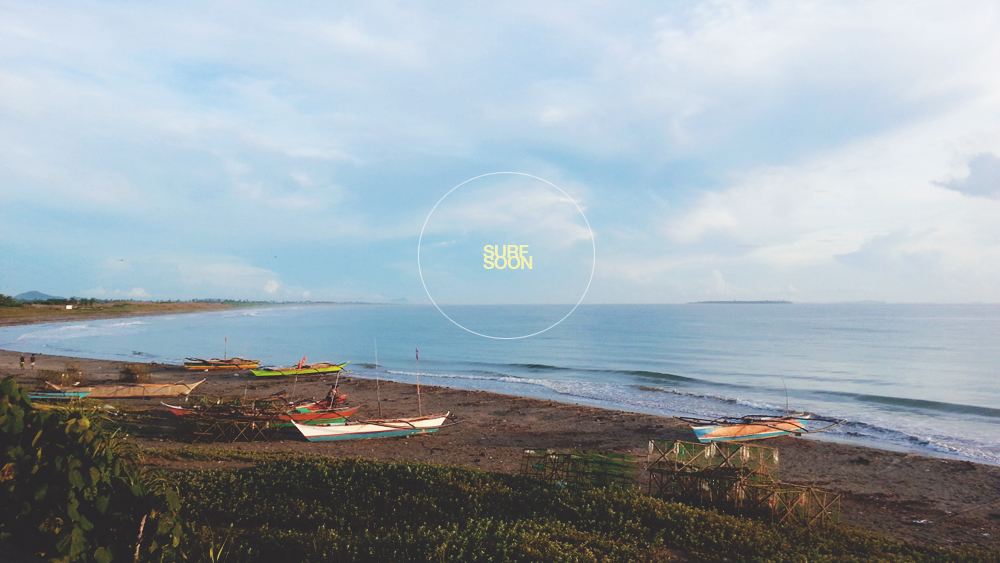
Source: Camille’s blog
Describe a moment you experienced that was incomparable to any experience before.
Imagine feeling the rush of a first love and the fright of ending it in the same second, the thrill of winning and the nausea of defeat in one moment, the invincible thump in your heart sounding exactly like the dull thud of an anchor dragging you to the ground over and over.
Imagine being too big and too small in one simultaneous swish.
Life burst at its seams the first time I ever rode a wave. And the best part is that the feeling resets itself each time. Every day at sea is the first day.
In your blog you thank surfing for “bringing you back to you.” Can you elaborate?
Out of all the times I reinvented myself, this here, this now, feels the most real. The gears have clicked. All the puzzle pieces fit. The lyrics match the melody. Everything just makes sense now. This was who I had always wanted to be and I just didn’t know it.
Are there any similarities to be found between surfing and writing? In the way you learn how to do it, or practice it, (or in general)?
My blog’s tagline is “Of riding words and reading waves.” There are countless intersections between writing and surfing, and here are just some of them:
First, you will fail. You will fail a lot. Surfing will make you want to quit before you learn to really love it. This reminds me of all the first drafts I tore, threw, shredded, or burned. Writing will first make you feel like you’re not good enough to write before you start getting comfortable with your words.
All surf sessions are first drafts. Nothing is ever perfect. There will always be better waves. But the point is to have gone out and surfed at all. The same way that the reward in the exercise of writing is having written, however imperfect, as compared to not having written at all.
Surfing does not just transform—it reveals character. If you are humble, then surfing will reflect your humility in and out of the water. If you’re a mean person then surfing will put a spotlight on this attitude of yours (whether you’re aware of it or not). In writing, you reveal whether you’re obnoxious or meek, kind or cruel, through your voice and diction.
On Page One
How many “page ones” have you had in your life?
I think I change every year, and I don’t mean changes of the small scale. I’ve reinvented myself so many times that I categorize people I know according to the time in my life that I met them. For example, I know this person from my rebellious high school punk phase, and then this person from my colorful harajuku college phase, and that person from my straightedge corporate office phase, and I also had a brief Tumblr girl phase, haha.
Do you believe people have the power to start over?
Definitely. One can never run out of Day One’s.
Are beginnings the hardest, easiest, or most so-so part of the storytelling process for you?
Sometimes, they’re the hardest. Sometimes, they’re not. The key to the storytelling process is timing. Know the right time to tell each story and the ease of writing it will follow.
How do you know the right time to tell a story? When you are ready.
What’s the best approach to beginning a story? What’s the worst?
If it feels light, it’s right. But if you’ve been tugging and twisting with the words for over an hour now, give your thoughts time to breathe. When you force the words out of you, your sentences come out choked. So let go and wait for a better place or time.
What can we expect from you in the future?
I wish to publish my own book although I don’t really know what I want it to be about yet. I just want to be able to hold something truly mine.
I want to continue teaching. If not college students, then maybe kids. I’d love to teach kids how to tell stories.
And I want to never be far away from the sea. After all, without surfing, I wouldn’t have come home to me.
Thank you for sharing your time with us, Camille!
About Camille
Camille Pilar teaches oral communication, new media writing, and communication theory at the Meridian International Business, Arts and Technology College (MINT).
She used to write daily memoirs under the pen name Pilar Pedrosa Pilar, but she’s now happier writing about her time at sea. Check out http://www.sea-you.ph for a little taste of salt water.