In March this year, I finished and launched my first book.
Actually, it was an e-book, and the publisher I worked with was generous enough to accommodate my novice writing. With the kind of blind enthusiasm that lulls paralyzing doubt to a nap, she said, “Yes. This can be done. Let’s do it!” So we did. Incidentally, the publisher was also me.
The process took all of ten months plus the lifetime that preceded it, as the book is a collection of short memoirs as gathered from years past. In one story, I am eight years old and seeing America for the first time. In another, I am six and reciting worries as though set to prayer beads. One other story finds me on the road, pondering Vista Land’s land ownership en route to work, while in another story, I am sitting cross-legged on a park bench with a beer. The opening story is about roses.
When the book was done, I knew for the first time what it truly means to be spent. To have given it all – everything – away. I was exhilarated to post the news on Facebook and miserable to have nothing else to write about afterward. It felt hollow to return home without a baby to birth; to have weekends without a reason to camp out at Starbucks with Skrimshander, my laptop.
I read an article once about the guys who went up to the moon. You know, the ones responsible for that giant leap for mankind. It detailed what they did after their lunar voyage, and the angle of the story was this: what was it like, returning down to earth after a feat like that? What’s left for one to do after being the first to sashay on the moon’s surface for mankind?
Retreating to my shoebox apartment the night of March 24, I felt like Neil Armstrong as referenced in the article. I felt like I had done it all, like I had gone to the moon equivalent of my mortal capacities putting together a Pages-assembled, independently-distributed, self-published unedited collection of self-proclaimed short memoirs.
It sounds crazy, by which I mean you know you’ve truly tried to write a book when the crazy startsto seep from your marrow. If you are lucky, you come only a little short of rocking back and forth by the sidewalk. If you are lucky, you manage to climb back home first.
At this rate – and I realized this soon after pitching the idea of this piece to the editors – I fear that there are only marginal notes about my e-author journey that are worth copying down. A good friend later talked me into doing an interview of sorts about the book, and I felt only inarticulate and frantic about everything I uttered in response. There were plenty of things I could have done better, in hindsight. For instance, I could have at least considered a version of the questions she had thought to ask me: Why these stories? Did I have a theme in mind? Why 12? What common thread ties the pieces together?
There isn’t a common thread tying the pieces together?
Out On Seventh Street Vol. I was a personal project I embarked on to fund a travel adventure. It was a small collection of stories I had already written but never published, as well as stories I had written with the specific goal of adding content to the book. I had little hopes for it other than that it’d help raise substantial funds, and probably make my friends and family proud. At the core, I think all I wanted was to know whether or not I would pull it off.
Of all the goals and objectives I had laid out for the book, perhaps only the last came to pass in all its fullness: I pulled it off. In typical dramatic writer fashion, sure, but still, I pulled it off. I started, and I finished.
This moon equivalent is not very big. Anyone can write and self-publish an e-document. What made it so seemingly intimidating, I think, was my default decision about its impossibility. Writing the book, I wanted to find out whether or not I would follow through. This seemed to me more pressing a concern than whether or not I could.
Which brings me here: I can’t say much about the success of self-publishing an e-book, particularly its success when compared to my specified objectives. To date, 40 kind souls have downloaded a copy of Vol. I, among them my dad, mom, and brother (to whom I unbegrudgingly emailed a free copy, because of course! A considerable portion of the collection is about them!) In the end, proceeds from the book barely funded two nights at the hostel I stayed in. In that regard, the e-book strategy was unsuccessful.
What I do know, though, is that I did it. What I know now is that pulling off a moon equivalent is impossible – until it isn’t. And what blows my mind is the truth that always, at some point, it will no longer be impossible.
I can’t say much about composing the outline of a book concept or preparing a viable marketing plan. All of this I am now only learning. But for those of us who continue to wrestle with beginnings, slogging through the mud for stories, exhausting ourselves with just writing it down, this much I could share: I think it’s all meant to feel that way.
Messy. Uncomfortable. As though something is amiss.
It’s all meant to feel that way when we’re writing a book – or a short story, or a personal essay – for the first time. Self-published or commissioned, printed or e-inked, the immediate challenge of writing something lay in the sheer discomfort of getting it down – and keeping it up, regardless of how bad the first sentence or climax or resolution sounds.
It’s all meant to feel a little like we’re faking it. Not because we are, but because when we have no idea what we’re doing, our best bet is to press on pretending that we do – hoping this eventually becomes its own self-fulfilling prophecy.
It’s all meant to feel a little aimless, especially if you’re like me and find outlines anxiety-inducing. If you work with outlines, I salute you. They’re helpful – just not for me, for some reason – and by all means, do what you can to help yourself.
All I’m saying is that this Impossible Default peels our eyes to the evidence and ways that a project Is Not Working, making it all the easier to bail midway.
But it’s okay: it’s meant to feel that way.
It’s meant to feel impossible because we have yet to know what it’s like for it to be otherwise.
Until we do.
When that happens, few things feel impossible afterward. It’s a little crazy, but yes, even sashaying on the moon.
For mankind.
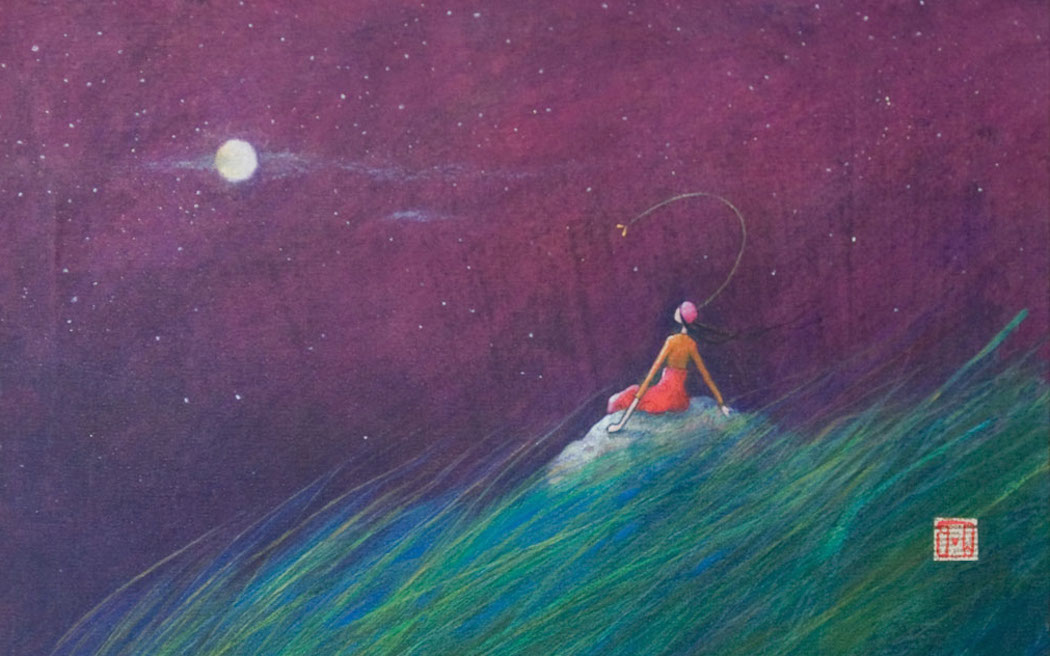
Featured image from Sarah via Creative Commons (CC BY-NC-ND 2.0)