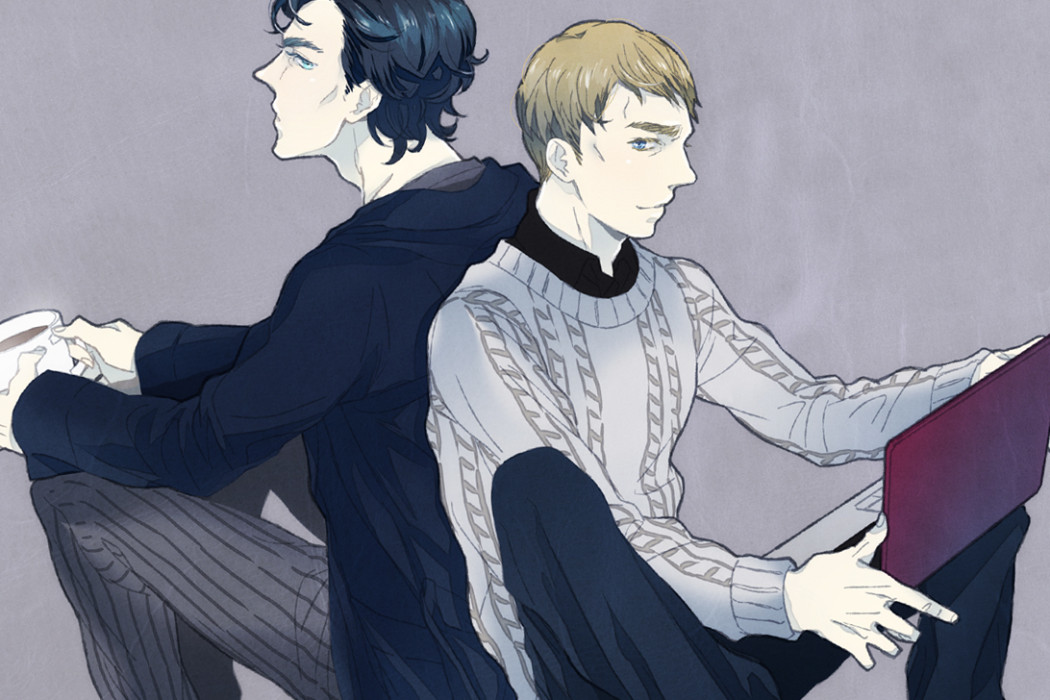
There is a leaf on Harry Potter’s head. It is early winter, but some trees aren’t finished dying, and so a leaf—the last one, most likely—has landed on his head. It’s caught in a lock of his messy black hair, but Harry doesn’t notice it and keeps talking. Hermione does, though, and she stares at the leaf as though everything else in the world has fallen away, and nothing else exists.
*
Hi and welcome to my brain exactly 10 years ago. The situation was this: high school bookworm, hopeless romantic, and avid consumer and writer of fanfiction. The above paragraph is the opening of a Harry/Hermione fanfic that served as the last bastion of my denial that (spoiler alert) Harry and Hermione were not meant to end up together. I thought of it one afternoon, wrote it in a day, and posted it on my blog—and forgot about it until now.
Looking back on it, I’m startled to find an encapsulated version of who I was as a young writer and as a teenager brimming with more yearning and feels than I could manage. Had I added breathless description of “the planes of Harry’s face” the fic would have been pretty much perfect.
Admit it: fanfic writers love them planes of the faces.
But also while looking back, I realize that writing fanfiction was as integral to my growth as a writer as learning the rules of basic grammar. There’s The Elements of Style. There’s Campbell’s hero journeying through the woods. There’s Writing Down the Bones.
Then there’s fanfiction.
Oh Fanfic, My Fanfic

My introduction to fanfiction was less than conventional: my sister placed a copy of an m-preg fic into my preteen hands, though she had thoughtfully deleted the scene that explicitly detailed how this certain m came to become preg. It would be a few years before I found the 18++ stuff on my own, but I was shocked—and delighted—that “extra” stories about the books and shows I followed so devoutly existed. What’s more: there were lots of them.
In fact, fanfic has only grown since then, with its millions of Hydra-heads occasionally slithering out into the spotlight; or, on rare occasions, mainstream respectability. As of March 2015 there were over 30 million fics posted to Wattpad alone, and over six million on the old-school Fanfiction.net. Supernatural, Frozen, One Direction, and Youtubers (!?) join the ranks of the most popular fandom ever: Harry Potter. Fanfiction isn’t limited to well-known franchises: in fact, if it exists, there is fanfic for it.
This is the fandom version of Rule 34 of the Internet, which states: if it exists, there is porn for it. Which, depending on the kind of fanfic you’re reading, is sort of the same thing.
Over the years, I’ve written fanfic for various book and anime universes. The longest story clocks in somewhere at 50,000 words (which is nothing compared to the absolute doorstoppers that some people have written) and the shortest around 1,300 words (what people might call ficlets).
My output was by no means abundant, nor were my fics particularly popular. I never ever came close to the fervor of Cassandra Clare’s fandom-in-a-fandom or even experienced the sort of hits that a modestly-successful Wattpad author would enjoy today. The unbridled success of EL James and Anna Todd still trigger a slight indignation on behalf of my younger self, who believed that fanfic ought to remain a commercial-free labor of love. For her, fanfic was a personal, private joy, a way to connect to a larger community.
My days of actively reading and writing fanfic are over for the most part, but one last link remains. My most recent “fic”, a work in progress for a somewhat obscure book, was updated a year ago and has less than 15 reviews. I work on it whenever I’m absolutely dried out of inspiration and turn to my favorite books for solace. Except, what ends up happening is that I fall in love with those books all over again and need to do something—anything—to keep the story alive.
Why Writing Fanfic Makes You a Better Writer
So, though I am not the fanfic enthusiast I once was, fanfic isn’t quite done with me. I might not be into all the fanfic that’s posted (torrid fanfic about Vine celebrities, no matter how well written, is something I cannot wrap my head around). I also might not approve of how publishers have attempted to capitalize on the success of certain fanfic, even if I understand why they do.
However, I believe that writing fanfic can and does improve one’s skills as a writer. It can be someone’s first taste of what it means to have readers, and of how to be part of a writing community. Whether you’re a beginning writer, stuck in a creative rut, or you simply enjoy fanfic for its own sake, here are a number of reasons why writing fanfic makes you a better writer:
1) With a pre-existing world and characters already laid out, you can concentrate on writing a plot.
World building is hard. Character development even more so. Every writer risks getting mired in the rules and details, which can inhibit them from laying a single word on the page.
“When you write fanfic, you have a pre-existing template on which to build a story. The characters and their motivations are outlined in bold brushstrokes. The worlds are mapped out. You still have to use your imagination to tweak the existing scenario as your story demands, but at least you’re not starting from a blank page.
The result? You learn to build a plot. Figure out pacing. Craft dialogue. Set a tone. You focus your attention on how to invoke powerful emotions, or set the stage for a bombastically romantic scene.”
Writing fanfic doesn’t excuse you from putting the work in, but it definitely removes some of the biggest barriers to finishing.
2) You learn to write in different styles and dabble in different worlds
In my creative writing course, we spend a lot of time learning about writing style. We study the styles of different writers, from Raymond Carver’s uncomplicated brevity to Hilary Mantel’s packed layers. Experimenting with different techniques gives us insight into how to better cultivate our own.
A similar sort of exercise occurs when writing fanfiction. You learn to imitate the author’s stylistic flourishes, their language, the way they write dialogue. The way JK Rowling writes about contemporary Britain in her novels is different from how Steven Moffat writes it for TV, which is different from how Harry Styles experiences it in real life.
You will hit upon things that feel awkward and “not-you” but you will also hit upon things that feel just right. Either way, you will learn. Bonus points? You don’t have to shell out many thousands of dollars for a master’s degree. Take it from me.
3) The anonymity of writing fanfiction emboldens you to take risks

Anonymity in fanfic is somewhat subjective. Some authors are all about self-promotion or sharing their real-life identity, while others operate under the darkest shrouds of secrecy. I don’t think the main reason for pen names is shame; on the contrary, anonymity can be incredibly liberating.
No one has to know that it’s you—straight-A student, God-fearing Christian, drag street racer, popular fashion blogger, competitive swimmer that you are—writing Steve Rogers/Bucky smut for an audience of thousands. You can be bolder and braver with your writing. I’m not just talking about erotica—you can explore violence, difficult topics, experimental language.
Sometimes, building off of someone else’s work is the best way to find your comfort zone as a writer. And the best way to test it.
4) You receive feedback from a public audience, and learn how to incorporate that feedback into your story
The difference between writing and publishing is what you do with the story you’ve written. If you want to be a published writer, you have to get used to making your work, well, public.
Comments are the most common and immediate feedback one receives on their fanfic. Sometimes the comments can be positive, and a powerful motivation to keep writing. Sometimes they can be critical—while these aren’t always easy to receive, they can help you identify areas of improvement.
 Sure, not all critical comments are helpful, but this is the case even in formal writing workshops. I believe the fanfiction community is overall kinder towards its writers, and offers a secluded and somewhat safe space for someone to share their writing. Which brings us to the last point…
5) Fanfiction connects you to a community of passionate readers and writers
It is through fanfiction that I found my first “writing community”—a small circle of aspiring YA writers who left comments on each others’ stories and supported each other’s progress. We created fantasy role play forums (not the 50 Shades kind) and laughed over the pairings we’d make. When I moved back to Jakarta in 2000, I made my first friend over our mutual love of manga and fanfic.
To write fanfic is to connect not just with fans, but with fans who have built a self-sufficient community independent of the original work. They have a shared language, unique insider-y references, and planned gatherings all over the world. Writing fanfic not only teaches you about writing, but what it means to fully appreciate a creator’s work in the digital age.
*
It is easy for skeptics and overprotective authors to banish the whole of fanfic into the wastelands that Mufasa forbade Simba to visit, but to do so would be lazy and highly inaccurate. There are good and badly-written fanfic just as there are good and badly-written published novels.
Some people don’t like it when you describe fanfic as a way to “practice” your writing, as though fanfic is merely a bridge to becoming a legitimate author. I say: whether your end goal is to write fanfic or original fiction or both, any time that you put into writing is practice. So why not try it with the characters and worlds you love?
About Bea Pantoja
Bea is a London-based graduate student and co-editor of The Galvanizers. Find her on Twitter & Instagram at @dalagaproject.